No camera. No experience. No cold-calling. You bring their own storefront back to life — then show up with it finished.
$299 today. Then $99/mo after 90 days for the software. Cancel anytime, one click.
Open Google Maps. Type your town plus one word. Dentist. Roofer. Pizza.
Now look at the photos.
Every business on the street. Bad in the same way.
That is your market. It took you eleven seconds to find it.
No photographer walked into that building. No scheduling. No decade behind a camera. No hours of retouching.
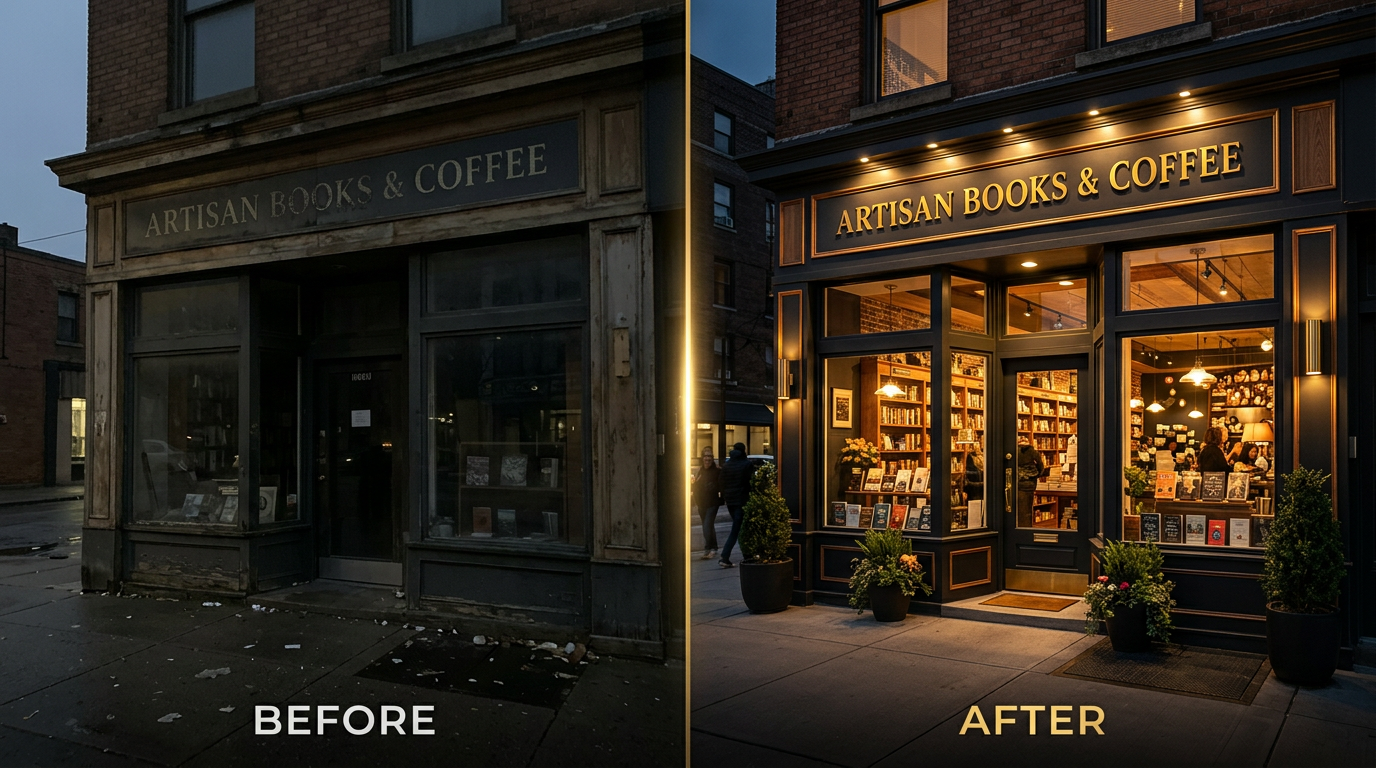
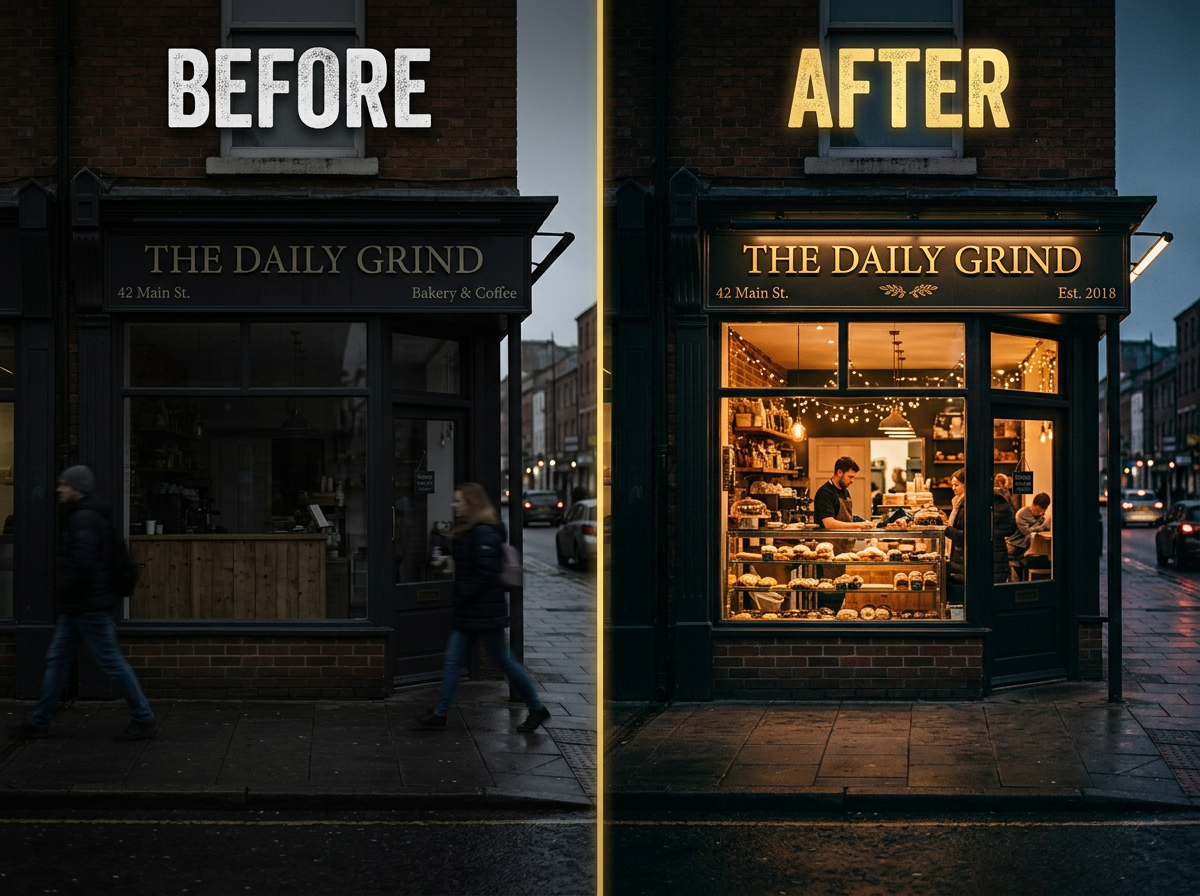
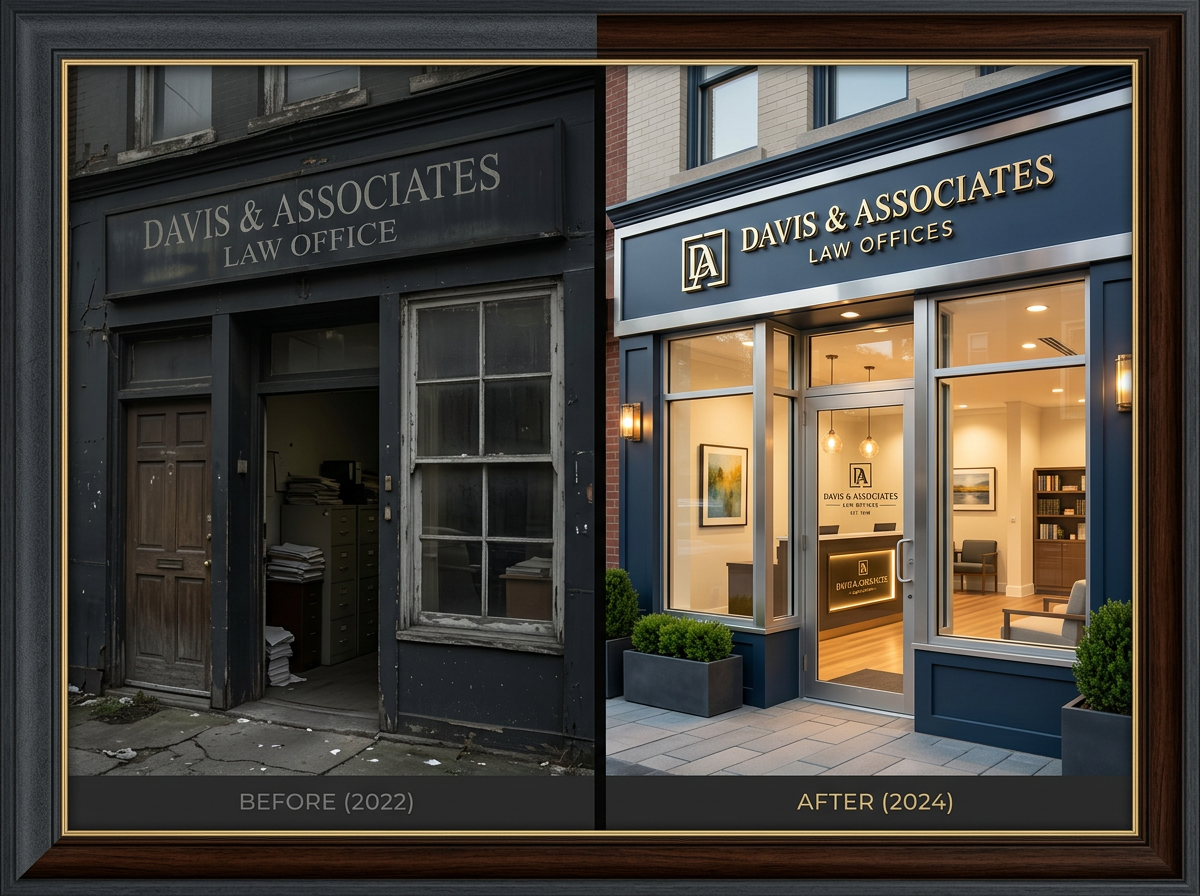
The business's own photo went in. A few plain words described what it should look like. That's the "after."
And that's the part that matters most: it's their storefront. Their crew. Their dining room. Not a stock photo of smiling strangers who've never set foot in the place — the business's own material, finally looking the way the owner always wished it looked.
"Isn't that deceptive?"
No. It's the business's own storefront, products, and people, made to look their best — the same thing every photographer has done in editing for thirty years. You can disclose exactly how it's made. Every client who says yes knows what they're buying.
| The Work | What Businesses Pay Today | Produce It With the Software |
|---|---|---|
| One headshot | $150 – $600 Scott Headshots / Snappr, 2026 | A few dollars |
| A day of corporate photography | $3,000 – $5,000 Luminous Space, 2026 | A few dollars |
| A product image set (one listing) | $300 – $1,200 Snappr, 2026 | Under $10 |
| Virtual staging (real estate) | $25 – $70 / image Stuccco, 2026 | Cents per image |
| A restaurant menu session | $750 – $2,500 FoodOasis / PlatePhoto, 2026 | Cents per dish |
I am not telling you this is what you will earn. This is what businesses already pay. The line item already exists in their budget — it has for thirty years.
The only thing that changed is what it now costs to create.
That gap is the entire opportunity. Gaps this size don't stay open.
(All figures are documented market rates from the sources listed. They describe what businesses pay, not what any customer earns. Results vary.)
Their tired, dark photos brought up to professional quality.
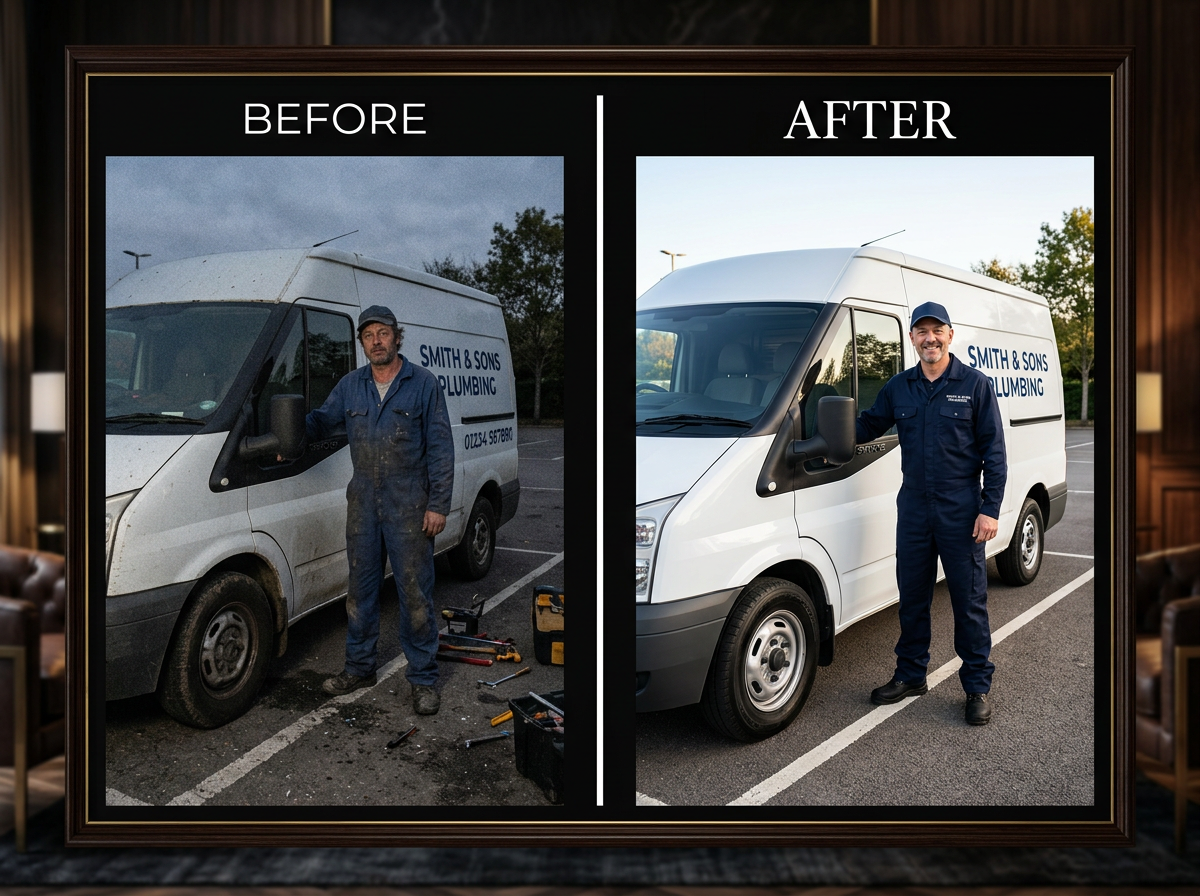
The actual owner and the actual crew, in clean, polished settings.
Almost nothing to work with? A full gallery from the ground up: products, space, menu.
Upload what they already have. Describe what it should look like. That's the workflow.
Trap 1
Someone generates a photo of a plumber. A guy, a truck, a van that looks close enough. Sends it to a real plumber. He looks at it for two seconds: "That's not my truck. That's not my crew. That's not my shop." Dead before the conversation started. A business owner will only ever buy their photos.
Trap 2
Uploading to stock galleries and hoping a stranger buys one for a dollar. Sellers report needing a thousand-plus accepted images for modest returns — and the major platforms have stopped accepting AI submissions anyway.
Notice what both traps have in common. They invent a picture out of nothing and try to sell it to someone who never asked for it.
We do the exact opposite. A real business. Their real material. Their real people. Sold to the one person who already has photography in their budget.
Nobody bans a picture of a real dining room.
Headshots. A race to the bottom against $29 apps, a poor usable rate, and regulated industries moving to ban synthetic faces. This is where the entire crowd went.
Hero shots, catalogs, listings.
Crews mid-job, hands at work.
Storefronts, interiors, the space.
The local money, the best data, and all of the repeat business live in the three nobody is selling.
"Am I too late?"
Look at what's actually being taught right now: make AI headshots, or sell AI stock images. Both traps. The lanes above are open because everyone crowded into the obvious one. Before today, had anyone shown you the eleven-second test?
Any local shop with sad photos. You found four of them eleven seconds ago.
Before you say a word to anyone. Their storefront. Their crew. Finished.
Put their own "after" on the table and ask one question: "Want it?"
That's the entire pitch. Two words.
You're not selling. You're not performing confidence you don't feel. The finished work does the believing for you.
And no photographer on earth can compete with it. A photographer gets hired first, paid first, scheduled first — then produces. They physically cannot walk in with the finished shoot and ask "want it?"
You arrive holding the one thing every agency, every freelancer, and every photographer has to ask for on credit: proof.
"I'm not creative and I've never sold anything."
You get copy-and-paste briefs, so you're never staring at a blank screen. And you don't cold-pitch — you build the gallery first and show up with the work done. That's the whole method.
There's a street in your town with five restaurants on it. Right now they're in a stalemate — everyone's photos are equally bad, so nobody stands out and nobody worries about it.
Then one of them fixes theirs.
Google's own data: business profiles with photos get 42% more requests for directions and 35% more clicks to their website. Photos aren't decoration on a Google profile. They're how customers decide.
So that one business starts pulling ahead. And the four around it become the "before" — visibly, two doors down, on the same search results page their customers are looking at.
In every town, exactly one business gets to go first.
Business owners check their competitors' listings obsessively. When it gets uncomfortable enough, they call whoever did it.
You don't hunt for clients two through five. Client one creates them.
And it doesn't end at delivery. Google rewards profiles that add fresh photos regularly. Menus change monthly, specials weekly, products rotate, seasons turn.
The recurring part isn't something you invent and talk someone into. It's built into how the platforms already work.
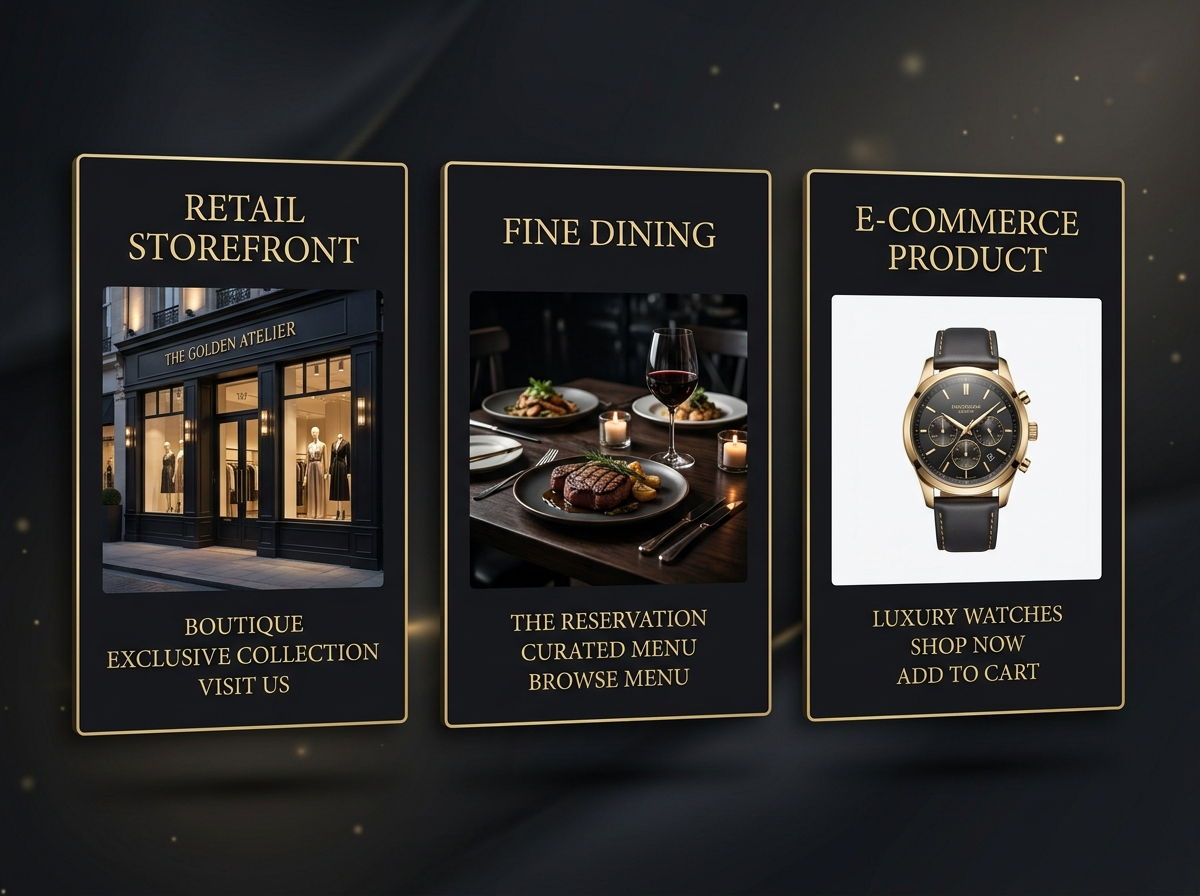
The anchor. Their Google profile, website, and social, taken over end to end. 30–40 finished images of the storefront, the crew, the space.
$1,500–$3,000 setup, then $500–$1,500/mo.
Best for: anyone comfortable walking into a local business.
Menus and specials change weekly, so the work repeats by design. DoorDash's own data: menu items with photos see up to 44% more monthly sales.
$1,000–$2,500 to start, a few hundred a month after.
Best for: anyone who likes food and foot-traffic businesses.
Priced per listing, delivered remotely. No meetings, no doorways.
$300–$1,200+ per listing.
Best for: anyone who'd rather never walk into a business at all.
Three businesses. One studio. No experience required.
The 2-Hour Blueprint. All three playbooks. 90 days of the software included.
$299 today. Then $99/mo after 90 days for the software. Cancel anytime, one click. Instant access.
30-day money-back guarantee
The 2-Hour Blueprint. — the entire business end to end: what to offer, what to charge, what to say.
3 complete playbooks: — Local Takeover, Restaurant, E-commerce. Exact prices, scripts, shot lists.
90 days of the Studio Zero software. — the engine that runs all of it.
Plus the closing kit — weighted toward the part where people actually stall:
Most people don't fail at making the images. They stall at asking for the yes. That's why seven of these are about closing.
go through the Blueprint
from their Google photos
show the finished "after"
Go through the Blueprint. Do one before/after, on a business in your own town.
Notice what the guarantee doesn't ask. It doesn't ask you to make sales. It doesn't ask you to land clients or hit a number.
It asks you to build one thing and look at it.
Worst case: you get a refund, plus a finished gallery, plus a real answer to "could I actually do this?"
We take the risk. You keep the proof.
If that's you, your first client could be two doors down.
$299 today. Then $99/mo after 90 days. Cancel anytime.
30-day money-back guarantee
Here's what I'll show you instead.
Studio Zero is brand new. Nobody has taught this as a business before, which means there are no student results yet — and I'd rather tell you that plainly than dance around it.
So here's the proof I do have. You don't have to trust me for any of it: Google's own data — profiles with photos get 42% more direction requests and 35% more website clicks. DoorDash's own data — menu items with photos see up to 44% more monthly sales. Published rate cards — every price in the table above, from the sources listed. The output itself — below.
Local Plumber — Before / After
Law Office — Before / After
These sets show output quality. They are not claims of income or business results. Public examples are labeled as market examples and are not customers.
| The Job | The Old Way | Studio Zero |
|---|---|---|
| Getting the shots | Hire a photographer. Schedule. Wait. | Produced from a brief, same day. |
| Cost to deliver | $300 to $6,000 per shoot. | Software cost. |
| Keeping it fresh | Book another shoot. | Refresh monthly, on a retainer. |
| Getting clients | Cold-pitch with nothing in hand. | Show up with the finished "after." |
We are not competing with photographers. We serve the businesses that were never going to hire one.
They could build their own website too. They don't. You're selling judgment, the shot list, the platform specs, and having it off their plate. Most owners don't know the tool exists yet.
Close this page. The street you looked up eleven seconds into this stays frozen — until somebody else moves first. And somebody will.
In every town, exactly one business gets to go first, and exactly one person gets to be the one who did it.
Take the $299. Run the Blueprint. Bring one tired storefront photo back to life — good enough to walk to the owner it belongs to.
You'd be standing in the gap you watched open up thirty seconds ago. If it's not for you, every dollar back.
$299 today. Then $99/mo after 90 days. Cancel anytime.
30-day money-back guarantee · Instant access